Real examples from AUS faculty, upcoming events and workshops, and help when you need it. Connect is the community layer of the AI Hub, where practice, people, and support come together.
FEATURED EVENT · CALL FOR ABSTRACTS
AI Symposium
AI and the Future of Learning: From Policy to Practice
16 April 2027 · American University of Sharjah
A wider conversation starts here. Join educators, researchers, students and industry to connect responsible AI policy with meaningful practice.
Teaching & Learning · Research · Student innovation Open to AUS and external participants.
Explore how AUS faculty are putting AI into practice in teaching and learning.
← Back to all spotlights
FACULTY SPOTLIGHT · CAS
Pekka Santtila
Professor of Psychology Head of the Department of Psychology
From interviewing theory to practice
AI avatars let college students practice the interviewing skills they first learn in theory.
AI avatarsPractice and feedback
Preview spotlight
FACULTY SPOTLIGHT · PSYCHOLOGY · CAS
Pekka Santtila
Professor of Psychology and Head of the Department of Psychology
From interviewing theory to practice
AI avatars let college students practice the interviewing skills they first learn in theory.
The classroom approach
In his Legal Psychology course, Pekka combines the theory of investigative interviewing with AI-produced simulations. After learning about children’s memory, suggestibility and evidence-based interviewing, students practise with AI-simulated child witnesses.
Practice, feedback and learning
Students receive feedback between interviews to improve their use of open questions. The simulations provide a way to practise a skill that cannot ethically be rehearsed with real children. Pekka is exploring how much practice and what kind of feedback students need before the skill holds.
How the technology supports the goal
The avatars run on a dedicated website, using a large language model accessed through API calls. Pekka describes tightly controlled prompts designed to make each avatar respond like a child of the specified age. He reports that students’ speech is not saved and no personally identifying information is entered.
“Start from a skill your students need to practise, not from the technology, and see if AI can help you achieve the goal.”
← Back to all spotlights
FALL 2026 AI BOOTCAMP WINNERS
Hussam Alshraideh
Professor Industrial Engineering
Abdurrahman Irscheid
Assistant Professor Mechanical Engineering
Abdallah Ghazal
Visiting Assistant Professor Mechanical Engineering
AUS Leopards Engage
A Jeopardy-style classroom activity that turns lecture material into interactive questions students can answer on their phones.
Active learningAI-assisted design
Preview team spotlight
FALL 2026 AI BOOTCAMP WINNERS
Hussam Alshraideh
Professor Industrial Engineering
Abdurrahman Irscheid
Assistant Professor Mechanical Engineering
Abdallah Ghazal
Visiting Assistant Professor Mechanical Engineering
AUS Leopards Engage
Turn every lecture into a live Jeopardy challenge
AUS Leopards Engage is a Jeopardy-style classroom activity prototype developed by Hussam Alshraideh, Abdurrahman Irscheid and Abdallah Ghazal, the winners of the Fall 2026 AI Bootcamp. It turns class material into a live challenge that students play on their phones, with a report for every student.
Build a challenge from your class
Start with an instructor microphone recording and live transcription, uploaded audio, a PDF, text captured through OCR, or a topic. The tool supports a choice of local or online AI models, as well as predefined questions. Instructors can review and edit AI-generated questions before use.
Keep students involved and follow up
Random pop-up quizzes offer another way to check understanding during class. Instructors can manage a class list, review response statistics and email individual feedback, using the results to decide which concepts to revisit.
Keep teaching judgment at the centre
The team used Claude as a design partner and tested ideas through simulated classes. The practical takeaway is to treat AI-generated questions as starting points: check their relevance, wording and accuracy before bringing them into the classroom.
Active learningAI-assisted designInstructor review
← Back to all spotlights
FACULTY SPOTLIGHT · CAS
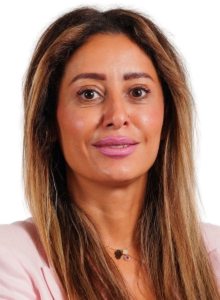
Diana Audi
Mathematics Senior Instructor Department of Mathematics and Statistics
Beyond generic AI: a mathematics mentor that teaches your way
A personalized AI mentor brings Diana’s course materials, notation and teaching approach into on-demand support for Calculus II students.
MathematicsCustom GPTStudent support
Preview spotlight
FACULTY SPOTLIGHT · MATHEMATICS · CAS
Diana Audi
Mathematics Senior Instructor, Department of Mathematics and Statistics College of Arts and Sciences
Beyond Generic AI: Bringing the Instructor’s Teaching Style into a Personalized AI Mathematics Mentor
Support that stays close to the course
Diana developed a customized AI mathematics mentor, initially implemented in MATH 104 (Calculus II), to offer personalized, on-demand support beyond class. It draws on her handwritten lecture notes, textbook materials, selected practice problems, worked solutions and explanations. The mentor is designed to reflect her notation and step-by-step teaching methods.
Reasoning, not just answers
The aim is to support mathematical reasoning, conceptual understanding, independent problem-solving and confidence. Diana is developing a systematic research framework to evaluate student performance, engagement and learning experiences, with a longer-term goal of extending the approach to other mathematics courses.
The tools behind the mentor
A Custom GPT combines an instructor-curated knowledge base with custom instructions that guide its explanations and responses according to Diana’s teaching methodology.
Advice for other faculty
“Don’t simply introduce AI into your classroom—teach AI how you teach.”
Start with one course, integrate your own teaching materials, establish clear instructions for how the AI should guide students, and continuously test and refine its responses. AI should complement the instructor, not replace the learning process.
Events & workshops
Explore past events, recordings, and opportunities to connect.
November 2–5, 2026
AI Week Fall 2026
Four afternoons bringing the AUS community together around responsible AI in teaching, learning, research, and practice.
Submit a short description of what you are doing. The AI Hub team reviews every entry, and with your consent we may feature it as a use-case or a full faculty spotlight.
Your submission is emailed to the AI Hub team
You receive a confirmation at your email that it was received
We review it and follow up if we would like to feature it